


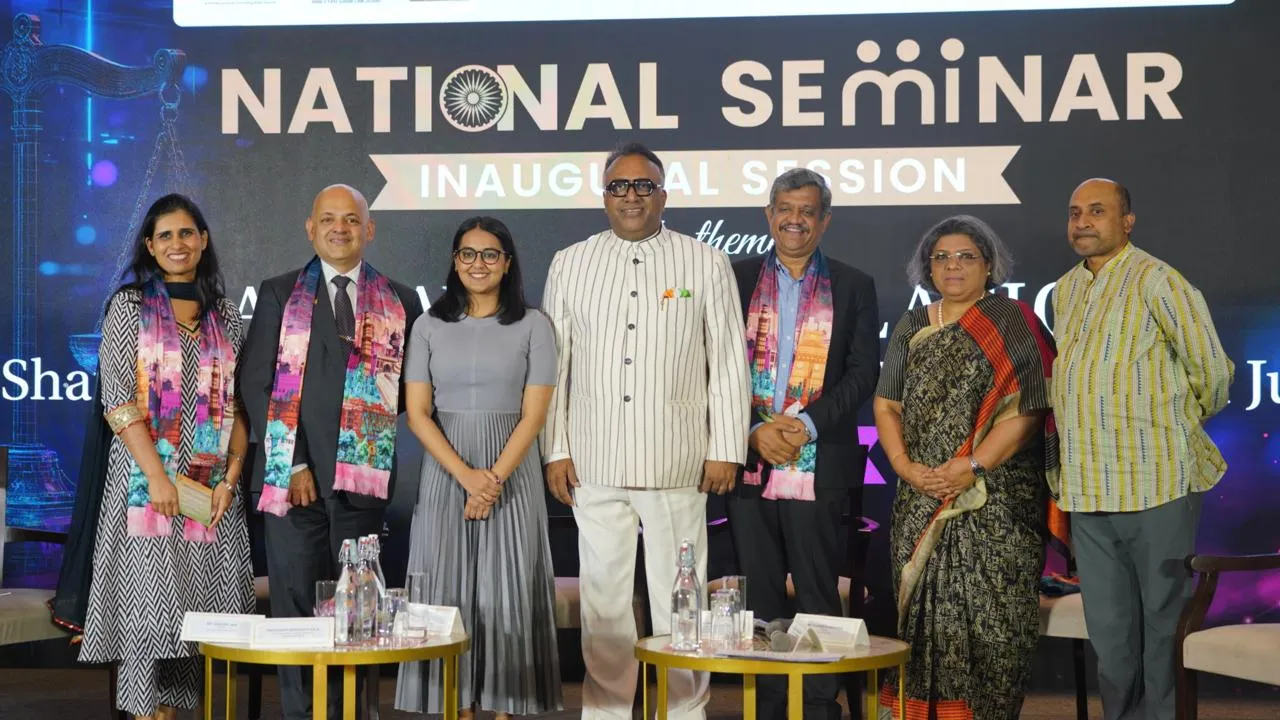
Vinayaka Mission’s Law School (VMLS), a constituent of Vinayaka Mission’s Research Foundation (VMRF-DU), successfully organised the National Seminar on “AI, Law & Regulation: Shaping the Future of Education, Profession & Justice” on April 2, 2026, in Chennai. The seminar was conducted in collaboration with Jindal Global Law School (JGLS), O.P. Jindal Global University (JGU), and the Cyril Shroff Centre for AI, Law and Regulation, with HCLTech Career Shaper™ as the Upskilling Partner.
The seminar commenced with a virtual keynote address by Dr. Palanivel Thiaga Rajan, Hon’ble Minister for Information Technology & Digital Services, Government of Tamil Nadu, who emphasised the transformative role of artificial intelligence in governance, digital infrastructure, and public service delivery. He highlighted the need for balanced regulatory frameworks that foster innovation while ensuring ethical accountability, positioning AI as a key driver in India’s digital future.
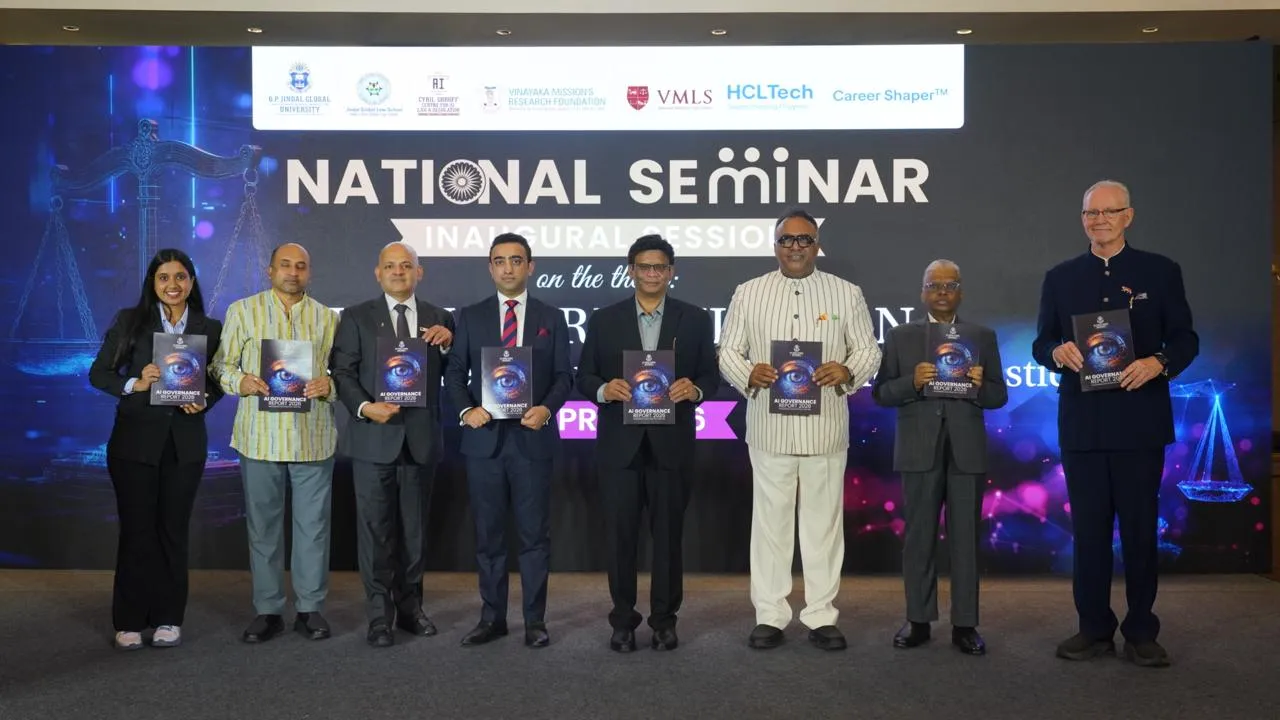
The inaugural session was marked by the introductory remarks of Dr. A. Francis Julian, Chairperson, Mentoring Committee, VMLS, followed by distinguished academic contributions from Professor (Dr.) C. Raj Kumar, Vice Chancellor, O.P. Jindal Global University, and Mr. Justice Michael Wilson, who reflected on the global and judicial dimensions of AI governance. Professor R. Padmanabha Ramanujam, Dean, Academic Governance, O.P. Jindal Global University, further emphasised the importance of research-driven regulatory frameworks in shaping responsible AI systems. The institutional vision was articulated through the Welcome Address delivered by Mr. J. Suresh Samuel, Chief Strategy Officer, VMRF-DU, and the address by Mr. Siddharth Raja, Executive Dean, VMLS, who introduced the Centre for Justice through Technology and highlighted VMLS’s commitment to integrating legal education with emerging technologies. The session concluded with a vote of thanks by Ms. Sinjini Sen, Assistant Professor, VMLS.
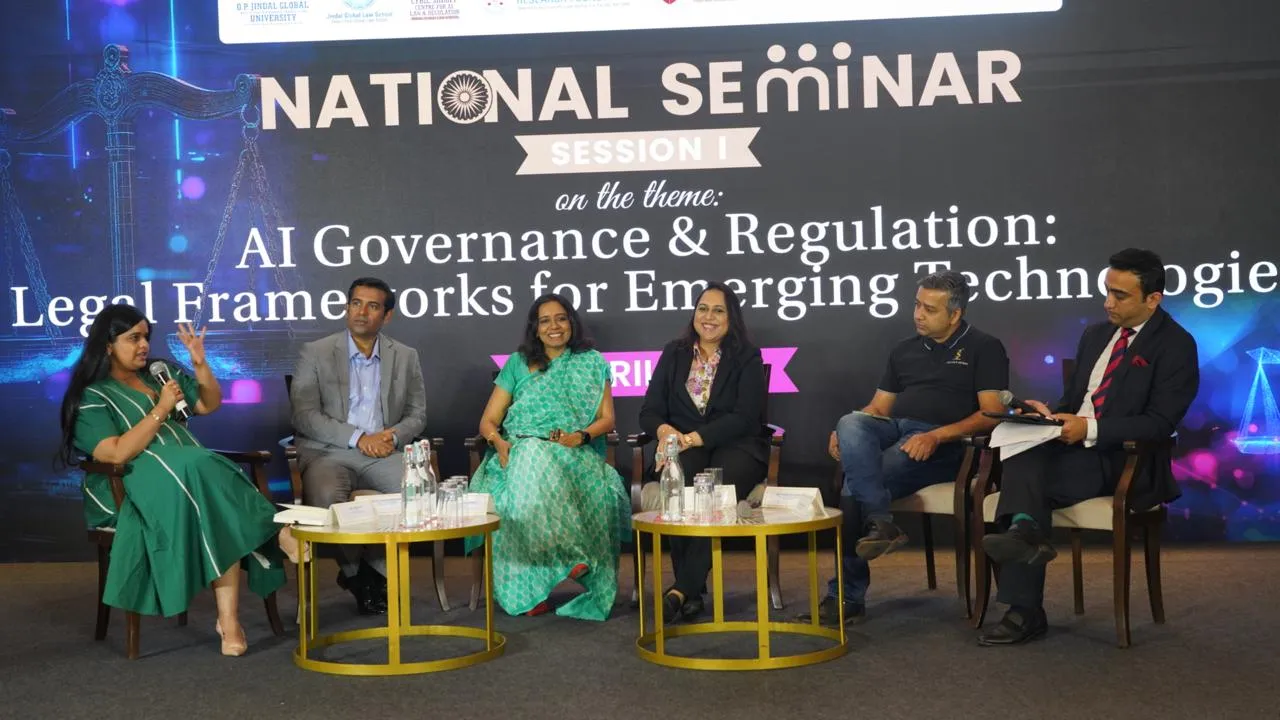
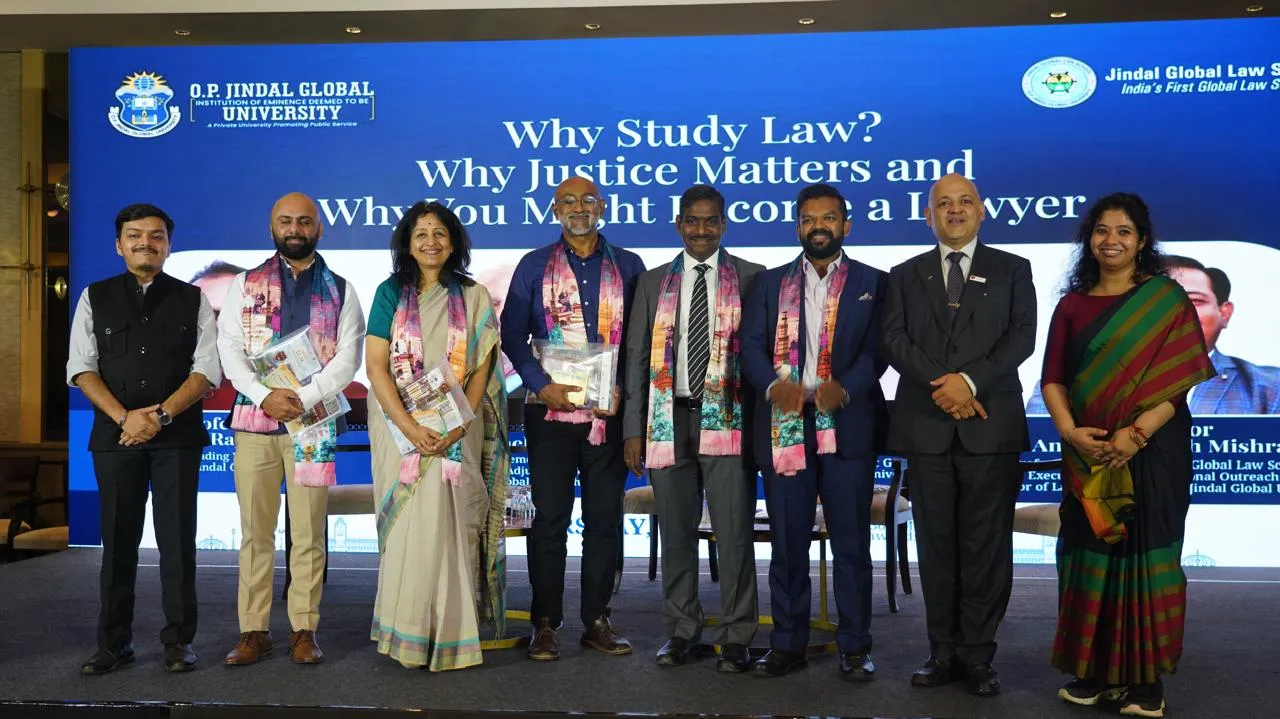
Session I: AI Governance & Regulation: Legal Frameworks for Emerging Technologies explored the evolving relationship between artificial intelligence, geopolitics, and legal regulation. The discussion underscored how AI has transitioned from a technological tool to a strategic instrument shaping global power dynamics, influencing warfare, diplomacy, and economic competition. Speakers highlighted India’s position at a critical inflection point, with the opportunity to adopt a balanced regulatory approach through “guardrails” — flexible frameworks that promote innovation while ensuring accountability. The session examined global regulatory models, contrasting Europe’s stringent compliance-driven framework with the United States’ market-oriented approach, while positioning India’s adaptive model as a middle path. Key issues such as data quality, data sovereignty, and ethical accountability were discussed, alongside challenges of bias, privacy, and uneven data infrastructure.
Session II: AI, Justice Systems & the Future of Legal Education focused on the integration of AI within legal systems and educational frameworks. The discussions emphasised the need for legal professionals to move beyond superficial use of AI tools and develop a deeper understanding of underlying technologies, including predictive algorithms and data-driven decision-making. The session highlighted the importance of reimagining legal education to equip students with interdisciplinary skills that combine law, technology, and analytical reasoning.
Session III: AI & the Transformation of the Legal Profession examined the evolving role of legal practitioners in an AI-driven ecosystem. Discussions focused on how AI is reshaping legal practice, from research and compliance to dispute resolution, while also raising concerns about ethics, accountability, and professional responsibility. The session emphasised the importance of adaptability, continuous learning, and the development of new skill sets to remain relevant in an increasingly technology-driven profession.
The seminar also featured a special address by Ms. Srimathi Shivashankar, Corporate Vice President and Global Head – EdTech Business, HCLTech, who highlighted the critical role of AI-led skilling and industry-academia collaboration, emphasising the importance of bridging academic learning with real-world industry requirements.